
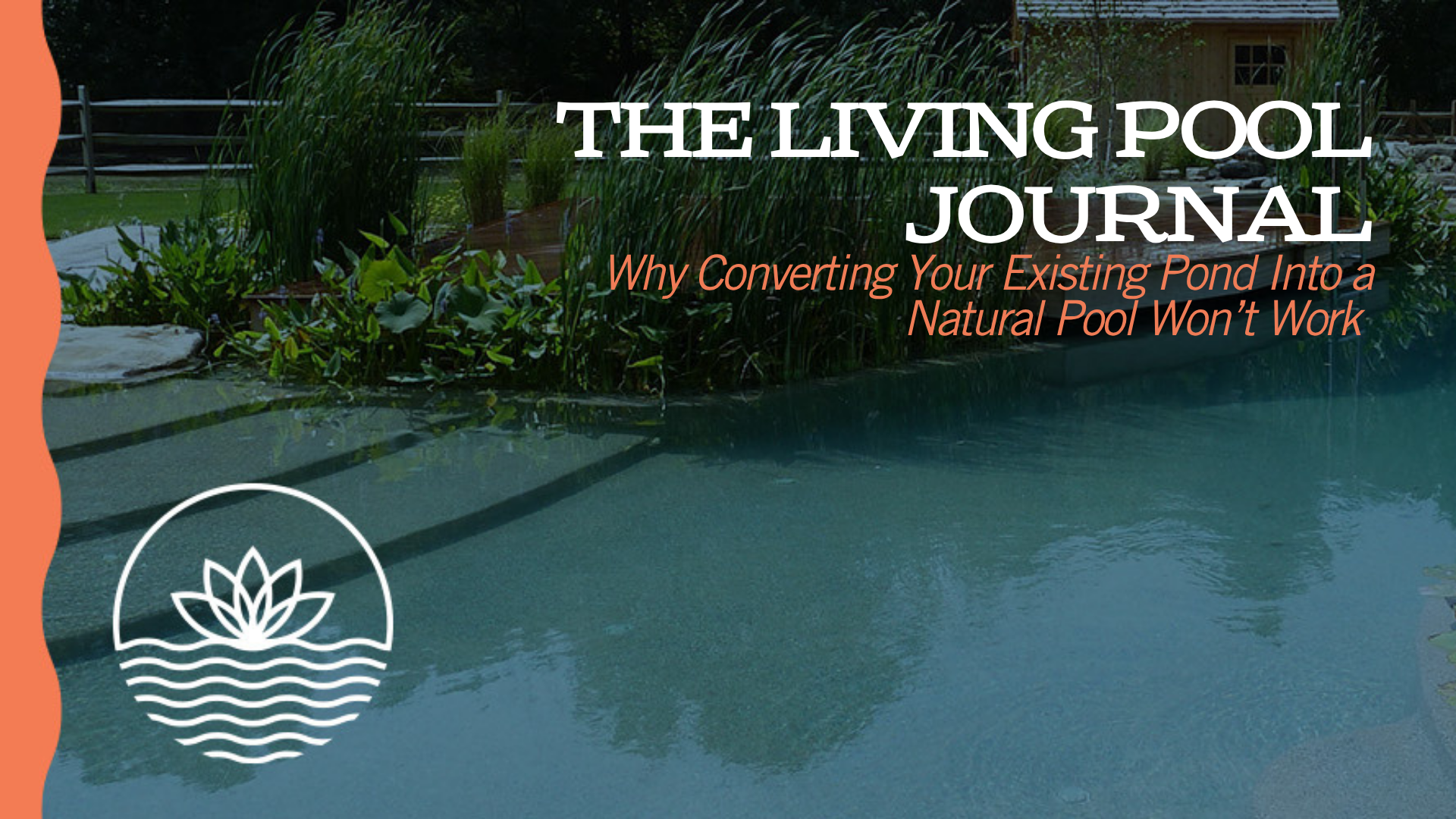
When homeowners first discover Natural Swimming Pools (NSPs), their minds often drift to two very different images. On one hand, they picture a sleek, chemical-free oasis. On the other hand, they worry about swimming in a murky, muddy farm pond filled with squishy bottoms and unwanted weeds.
If you’re wondering whether a Living Pool is just a gloriously renamed pond, we have good news: they aren’t the same thing at all.
While both leverage natural elements, a Nature’s Way Living Pool is a precisely engineered, high-performance aquatic system designed specifically for human swimming. Here is a breakdown of how a Natural Living Pool differs from a traditional pond, and why you get all the benefits of organic freshwater without the mud.
1. Engineered Biological Filtration vs. Stagnant Ecosystems
The single biggest difference lies beneath the surface. A natural pond relies on passive, ambient decay. Over time, organic matter accumulates at the bottom, creating silt, murky water, and algae blooms due to low oxygen levels.
A Living Pool, by contrast, relies on active, bio-engineered filtration. Using proprietary BioNova® technology, our systems continuously circulate water through specialized biological filters and biofilm matrices. Beneficial microorganisms actively consume nutrients (like phosphorus and nitrogen) before nuisance algae ever gets the chance to bloom.
The Result: clear, living freshwater that is biologically pure, safe for swimming, and completely free of chlorine or synthetic chemicals.
2. Structured Swimming Zones (No Mud Between Your Toes)
When you step into a natural pond, you’re usually stepping onto soft clay, decaying leaves, or mud.
Living Pools are structural installations. Built with reinforced walls, precise excavation, smooth vessel linings, or custom natural stone, the swimming zone is completely separated from soil. You get a firm, clean floor underfoot, just like a traditional pool, but filled with fresh, living water.
Depending on your aesthetic preference, Nature’s Way offers two main design directions:
-
BioPool®: Designed for those who want the crisp, architectural look of a traditional pool (complete with clean lines, tanning ledges, and steps), but powered 100% by bio-filtration instead of harsh chemicals.
-
BioSwimPond®: Designed for a natural lagoon look, featuring a designated regeneration zone filled with aquatic plants that filter the water, while keeping the main swimming zone open, deep, and debris-free.
3. Why Converting an Existing Pond Isn’t the Answer
A common question homeowners ask is: “Can’t I just convert my existing farm or ornamental pond into a Natural Living Pool?”
While it’s tempting, converting a standard pond into a swimming pool is rarely practical—or even possible. Here’s why:
-
Same Work (or Worse) Than Starting Fresh: To build a pool in an existing pond site, you must completely drain the pond, dredge out accumulated muck, and re-excavate to structural standards. This process often requires more labor, earth-moving, and site stabilization than starting from scratch in a new location.
-
Severe Hydrostatic Pressure & Groundwater Risks: Many natural ponds are spring-fed or sit atop a high water table. Building a pool in a location with high subterranean water pressure is a major structural hazard. Ground pressure pushes upward against the pool vessel, which can cause liners to float, structural walls to shift, or prevent you from safely draining the pool for future maintenance or repairs.
-
Regulatory & Environmental Hurdles: Existing ponds are frequently classified as natural bodies of water or wetlands. Modifying them often triggers strict environmental permitting, setback restrictions, or local conservation regulations that make conversion legally non-viable.
Building a Natural Swimming Pool on fresh ground ensures structural stability, optimal filtration design, and hassle-free permitting.
4. Active Water Circulation
Ponds are notorious for standing, stagnant water—the ideal breeding ground for mosquitoes.
Living Pools use continuous, low-energy pump systems to keep water moving 24/7. Water is skimmed off the surface, passed through biological filter zones, and recirculated back into the pool. Because mosquitoes require calm, static water to lay eggs, the constant flow in a Living Pool makes mosquito breeding practically impossible.
5. Designed for Pool Amenities & Year-Round Living
Try adding a diving board, an integrated spa, or an automatic pool cover to a farm pond! Because Living Pools are engineered structures, they support every luxury pool feature you can imagine:
-
Integrated stone waterfalls and jumping rocks
-
Underwater benches and sun shelves
-
Custom stone or timber decking
-
Solar heating and cooling integrations
-
Winter versatility: In cold climates, a Living Pool can easily be winterized or even allowed to freeze over safely to serve as a private winter ice rink.
6. Predictable, Low Maintenance
Traditional ponds often require constant chemical treatments, expensive dredging, or manual rake-outs to keep organic sludge from overrunning the water.
Because a Living Pool relies on natural metabolic processes to maintain balance, ongoing operational maintenance is significantly lower than both traditional chemical pools and unmanaged ponds. No chemical testing kits, no chlorine tablets, and no endless balancing act—just simple, seasonal upkeep of the live vegetation and biological filters.
Ready to Experience Pure, Chemical-Free Swimming?
A Living Pool gives you the best of both worlds: the organic, skin-friendly softness of natural water paired with the structural integrity, clarity, and luxury of a high-end pool.
Whether you prefer the sleek design of a BioPool® or the lush landscape integration of a BioSwimPond®, Nature’s Way Living Pools can bring your vision to life.
Schedule a Consultation with Our Team Today to learn how we can transform your backyard into a natural aquatic sanctuary.